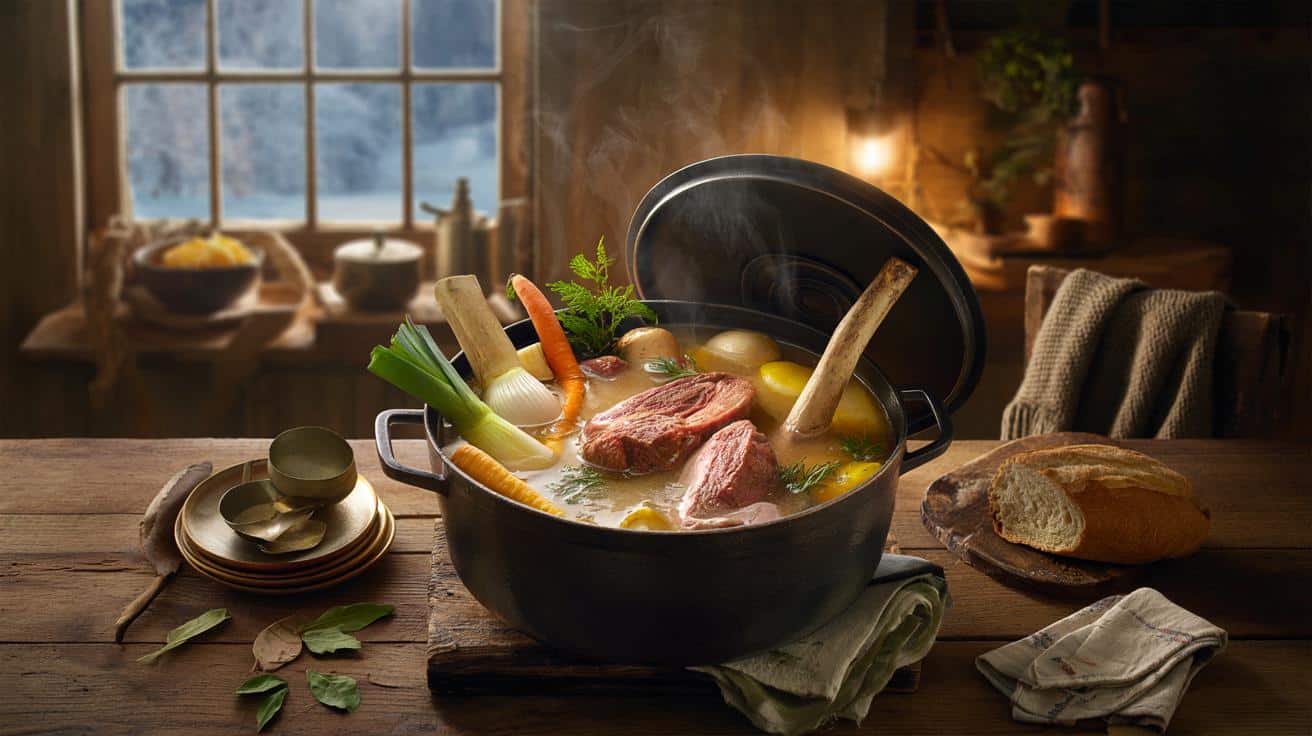
While many of us reach for cheese-heavy bakes the minute frost appears on the window, a quieter, humbler recipe is waiting in the wings. It comes from an age of wood stoves, wool socks and careful budgeting, and it could be the dish that truly carries us through the cold months this year.
Why an old-fashioned pot can feel new again
Over the last few winters, something has shifted in home kitchens. People are cooking less steak and more stews. Less single-serve, more big-batch. Between food inflation, soaring energy prices and a new concern for waste, the traditional “grandmother’s pot” is suddenly back in fashion.
Long, gentle cooking transforms cheap ingredients into food that feels generous, soothing and quietly luxurious.
French grandmothers knew this well with their pot-au-feu, a slow-cooked beef and vegetable broth that was once seen as a genuine winter remedy. In the UK and US, families had their own cousins to this dish: boiled beef, New England boiled dinner, Sunday stews, broth-heavy soups. All of them relied on the same basic logic: use tougher cuts, root vegetables and time, rather than money, to build flavour.
The winter dish your grandmother trusted: pot-au-feu
At its core, traditional pot-au-feu is disarmingly simple. It is nothing more than beef on the bone, root vegetables and herbs, simmered for hours in plenty of water. Yet that simplicity hides a lot of clever thinking.
A classic version usually brings together:
- Beef for boiling (often from the forequarter, which is cheaper but full of flavour)
- Marrow bones, for body and richness
- Carrots, leeks, turnips and potatoes
- An onion, sometimes studded with cloves
- A bouquet garni: bay leaf, thyme, parsley stems and a bit of celery
- Salt, pepper and patience
Everything goes into a large pot, is covered with cold water, then brought just to a light simmer for around two and a half to three hours. No frantic stirring, no complicated techniques. Just an occasional skim of the surface to keep the broth clear and a check that the heat stays low and gentle.
The magic lies in the slow swap between meat and water: flavour leaves the beef, moves into the broth, then climbs back into the vegetables.
Nutrition that makes sense for real life
Grandmothers didn’t talk about proteins, fibres or collagen, but their instinct was right. A properly made pot-au-feu is naturally well balanced:
➡️ The judges still can’t believe it: these two French brothers just won the pastry world championship
➡️ Turning the heating down before going out? It’s probably the worst reflex, here’s why
➡️ Here Is The New Pastry Chef Succeeding François Perret At The Ritz
➡️ A revolutionary therapy could eliminate 92% of cancer cells while preserving healthy tissue
➡️ You’ll Love It: This Miniature South American Fruit Tree Thrives In Pots At Home
➡️ Before, My Plants Froze Every Winter – Until I Stopped Throwing Away This Green “Waste”
➡️ No scales needed: the 1-2-2-2 method for foolproof crêpe batter using a single glass
➡️ If you want beautiful apples, this step is indispensable starting today
| Component | What it brings |
|---|---|
| Beef and bones | Protein, iron, collagen and a satisfying texture |
| Root vegetables | Fibre, slow-release carbohydrates and vitamins |
| Broth | Hydration, minerals and warmth without heaviness |
| Herbs and spices | Aromas that stimulate appetite and a sense of comfort |
Served the traditional way, you get the broth as a first course, then the meat and vegetables as a main. That structure alone slows you down, makes you feel fuller and leaves little room for late-night snacking on biscuits or crisps.
Why this dish works for tight winter budgets
From a financial point of view, pot-au-feu is almost designed for hard times. It makes use of what butchers call “less noble” cuts, the ones that need longer cooking. In many supermarkets and local shops, these are still cheaper than steaks or fillets, especially when bought in larger pieces.
A single pot can feed a family one evening, provide lunches for the next day and still leave a flask of broth for work.
Energy use can be kept reasonable too. Once the pot has reached a simmer, the flame can stay very low. On induction hobs or electric cookers, that matters. With a pressure cooker, the overall cooking time usually halves, which cuts both gas and electricity costs.
How to fit a “grandmother” recipe into a modern week
The main excuse many people give for avoiding slow-cooked dishes is time. Yet this kind of recipe fits surprisingly well around a busy life.
Planning the pot
One realistic strategy is:
- Start the pot in the evening while you unpack groceries or handle emails.
- Let it simmer gently while you relax, watch TV or help with homework.
- Turn off the heat, let it cool slightly, then refrigerate overnight.
- Reheat only what you need the next day.
The flavour even benefits from that overnight rest. Fat rises to the surface and can be removed easily from a cold broth if you prefer a lighter dish.
Giving leftovers a second and third life
This is where pot-au-feu really shows its value. Almost every part can be reused:
- Leftover beef can be shredded into a cottage pie, tacos or a beef sandwich with mustard.
- Cooked vegetables can be mashed with a bit of butter and reheated as a quick side, or blended into a smooth soup.
- Broth becomes the base for noodle soups, risottos, sauces or even a mug of savoury “tea” when you feel under the weather.
In sealed containers, the dish lasts around three days in the fridge. In the freezer, well-labelled portions of broth or meat can stretch across three months, giving you instant “home cooking” on nights when you are tempted to order in.
From raclette to broth: changing how we think about comfort
In many homes, winter comfort food now means melted cheese, cream and piles of charcuterie. There is nothing wrong with the occasional raclette or mac and cheese night. Yet eaten too often, these dishes bring a heavy dose of saturated fat and salt with less fibre or vegetables.
A pot full of vegetables and broth warms you from the inside, without leaving you sluggish on the sofa.
Psychologically, a slow-cooked pot also marks time differently. The smell in the kitchen, the gentle bubbling on the hob and the shared wait for dinner can anchor long, dark evenings. Many people who grew up with these dishes speak about the sound of a lid rattling softly or a parent lifting out a steaming bone as some of their strongest winter memories.
Small adjustments if you have dietary concerns
Modern eaters come with modern questions: salt, fat, red meat. Pot-au-feu can adapt quite easily.
- Ask your butcher for leaner cuts and just one or two marrow bones.
- Skim the broth once it has cooled. Firm white fat will lift off in seconds.
- Season the cooking water lightly, then adjust with salt at the table.
- Balance the meal with a sharp mustard, pickles or a simple green salad.
For people reducing meat, the same logic works with poultry or even legumes. A “fake pot-au-feu” with chicken thighs, chickpeas, carrots and leeks follows the same method and still provides a deeply comforting bowl.
Understanding why slow cooking feels healing
Many grandmothers treated this dish as medicine for colds, fatigue and long, damp winters. Part of that reputation comes from nutrition: warm liquid, easy-to-digest protein, and vegetables that are soft but still present.
There is also the effect of heat itself. Sipping a hot, lightly salted broth can ease a sore throat, encourage hydration and bring a brief sense of relief when your body is fighting an infection. Add the ritual of sitting at a table, talking, tearing bread and taking your time, and the relief becomes emotional as much as physical.
For families feeling the financial and mental strain of current winters, reviving this “forgotten” recipe is less about nostalgia and more about strategy. A single big pot stretches money, saves effort later in the week and gives everyone a reliable, warming meal to look forward to when the forecast turns bleak.