While most people wait for blossom and sunshine to think about fruit trees, serious growers are already at work. The way you handle your apple trees over the next few days will strongly affect how many fruits you see, and how good they taste.
Why February quietly decides your apple crop
In late winter, apple trees look dormant: no leaves, no flowers, just bare wood. Inside, though, something crucial is happening. The sap has sunk deep into the roots to avoid frost damage, and the branches have slowed almost to a standstill.
This apparent pause gives gardeners a rare advantage. Cutting branches now stresses the tree far less than during the growing season, and every cut helps direct the powerful spring surge of sap. That spring rush is what will either feed a jungle of useless branches or a canopy packed with flowers and fruit.
Winter pruning is not decoration; it is a steering wheel for the tree’s future energy.
The key winter operation is called fruiting pruning. Instead of simply shortening anything that looks messy, this method reshapes the tree so its energy travels to the buds most likely to become blossoms and, later, apples.
Gear up before you make the first cut
Good pruning starts before you even touch a branch. Blunt or dirty tools tear wood and spread disease. Clean, sharp blades are as much about hygiene as they are about comfort.
Tools you really need on hand
- A sharp bypass secateur for small branches and precise cuts.
- A sturdy lopper for thicker limbs that need extra leverage.
- High-strength alcohol or another disinfectant to wipe blades between trees.
Each clean, sharp cut is a barrier against canker, fungus and slow healing.
Reading the tree before pruning
Walk slowly around your apple tree and look at it from different angles. This first “diagnosis” often matters more than the cutting itself.
- Spot branches that rub or cross each other.
- Notice shoots pointing into the centre of the canopy instead of outwards.
- Look for shaded areas where light struggles to reach.
Your aim is a balanced, open structure that lets sunlight and air through. Light is not only about colouring the fruit later; it also reduces fungal diseases by drying leaves and bark more quickly after rain.
➡️ A revolutionary therapy could eliminate 92% of cancer cells while preserving healthy tissue
➡️ Before, My Plants Froze Every Winter – Until I Stopped Throwing Away This Green “Waste”
➡️ You’ll Love It: This Miniature South American Fruit Tree Thrives In Pots At Home
➡️ The judges still can’t believe it: these two French brothers just won the pastry world championship
➡️ Turning the heating down before going out? It’s probably the worst reflex, here’s why
➡️ Here Is The New Pastry Chef Succeeding François Perret At The Ritz
➡️ No scales needed: the 1-2-2-2 method for foolproof crêpe batter using a single glass
The February technique that sends sap straight to future apples
Once you understand the tree’s shape, the real work starts: selecting which wood will carry next season’s fruit. On apple trees, fruit is usually borne on short, stubby shoots called spurs that form on two- or three-year-old wood.
The winter method many home gardeners use with success is known as the “three-bud rule”.
Using the three-bud rule without overthinking it
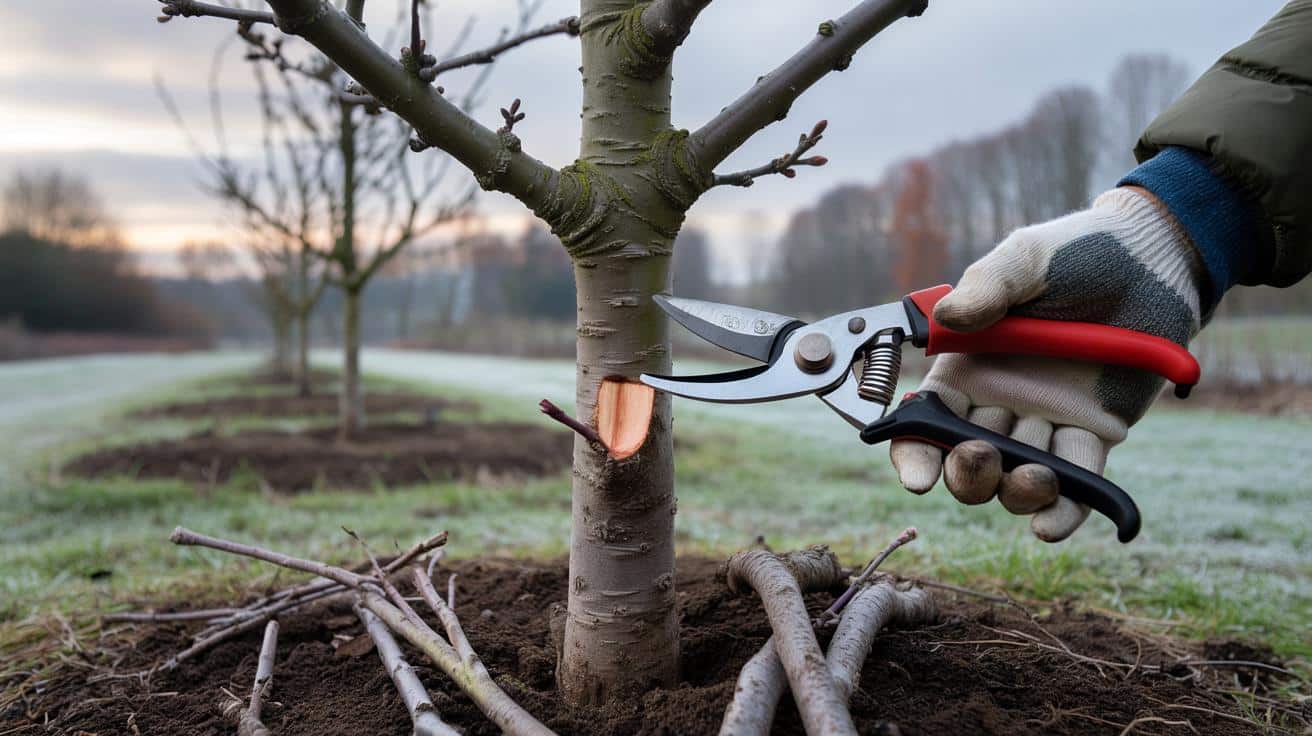
Choose a side branch you want to keep, but that is too long or too crowded. Starting from its base, count three buds along the length of the shoot. Then cut just above the third bud.
The three-bud cut keeps enough buds for flowering, while stopping the branch from racing away in leafy, unproductive growth.
Two details matter here:
- Pick a bud that points outwards from the centre of the tree.
- Angle the cut slightly away from that bud, so water runs off.
By choosing an outward-facing bud, you nudge the tree to grow in a spreading, open pattern. That reduces shade and keeps future wood easier to reach for later pruning and picking.
Mistakes that quietly ruin a season’s apples
Most pruning problems fall into two camps: doing almost nothing, or doing far too much.
Being too cautious
Leaving the tree largely untouched feels safe. Yet an unpruned apple tree wastes energy on long, upright shoots and dense interior wood. The result is a tangle of branches with fewer, smaller fruits hidden inside.
Going in with a heavy hand
Taking out large sections of the canopy in one go shocks the tree. It responds by firing up lots of very vigorous, vertical shoots known as “water sprouts” or “gourmands”.
Heavy pruning often creates a fountain of new wood but few apples, turning the tree into a leafy showpiece with little to eat.
Bad cuts and wrong angles
Even if you choose the right branches, the way you cut still matters. A flat cut just above a bud traps water. With winter rain and cold, that damp spot becomes a welcoming patch for fungi and rot.
A sloping cut, made in a gentle bevel away from the bud, lets rain drip off quickly. Leave only a small “collar” above the bud; cutting too close can dry it out, while leaving a long stub leads to dieback and hollow, rotten wood.
Helping the tree heal and keeping the area clean
After pruning, the tree begins a slow repair job. Small cuts usually close on their own, but larger wounds are more exposed to spores and insects.
Sealing big wounds the right way
On cuts wider than two or three centimetres, many gardeners still use a healing compound made from pine tar, clay or plant resins. This barrier reduces moisture loss and blocks some pathogens while the tree forms new tissue around the edge of the wound.
Opinions differ on sealants, yet one point is widely accepted: rough, torn cuts heal badly, while neat, slanted cuts heal faster, with or without product.
What to do with all those branches
Don’t just leave pruned branches piled around the trunk. Old wood often carries fungal spores, insect eggs or lichen.
| Type of pruned wood | Recommended action |
|---|---|
| Healthy branches | Chip for mulch or add to compost after shredding |
| Wood with canker or obvious rot | Remove from the garden or burn where allowed |
| Branches with dried fruit mummies | Dispose carefully to reduce disease carry-over |
A clean orchard floor in February cuts down the pressure of disease for the rest of the year.
What actually happens inside the tree after pruning
Each cut subtly changes how plant hormones move through the tree. The tip of a branch produces substances that suppress side buds. When the tip goes, that control weakens, and nearby buds become more active.
If you shorten a branch moderately, the nearest buds often turn into flower buds, not just leafy shoots. That is the quiet trick behind fruiting pruning: small, strategic cuts tilt the balance towards blossom rather than endless wood.
Practical examples for different garden situations
A young tree in its third year
For a still-developing apple tree, February is about building a strong frame. Keep three to five main “scaffold” branches, spaced around the trunk like spokes on a wheel. Shorten them using the three-bud rule, focusing on outward-facing buds to create a broad, open crown.
An old, neglected apple tree
If your tree has been ignored for years, resist the urge to fix everything in one winter. Removing too much old wood in a single season can shock the tree badly.
- Year one: take out dead, diseased and obviously crossing branches.
- Year two: reduce height and remove some of the oldest, least productive limbs.
- Year three: refine shape, open the centre and start using the three-bud rule on new shoots.
This staged approach lets the tree adapt while gradually restoring fruit quality.
Risks, benefits and small extras that boost your harvest
Winter pruning carries a few risks: heavy frost right after cutting can stress newly exposed tissue, and over-pruning can push the tree into survival mode rather than fruiting mode. Watching the forecast and avoiding pruning just before a severe cold snap lowers that risk.
The benefits, though, stack up. Better light penetration, stronger branches that can bear weight, improved air circulation and easier picking all come from a few thoughtful hours with secateurs in February.
Coupling this work with other gentle winter actions multiplies the effect: a ring of compost or well-rotted manure spread around, not against, the trunk feeds the roots; a quick inspection for loose ties or tree guards prevents bark damage; checking for old, shrivelled “mummy” fruits and removing them sharply cuts disease carry-over.
A short, focused session now can mean baskets of clean, well-sized apples instead of a handful of misshapen survivors.
As winter starts to loosen its grip, that quiet, careful pruning session will already be shaping each flower cluster and every future apple on your trees. The garden may look asleep, but next season’s harvest is being written right now, one cut at a time.