As gardeners start plotting their spring purchases, one compact fruit shrub from South America is stealing the spotlight from classic citrus and dwarf apple trees. Easy-going, beautifully aromatic and happy in a simple container, it offers city dwellers a genuine taste of the Andes without demanding a greenhouse or a huge garden.
A tiny “fruit tree” made for balconies
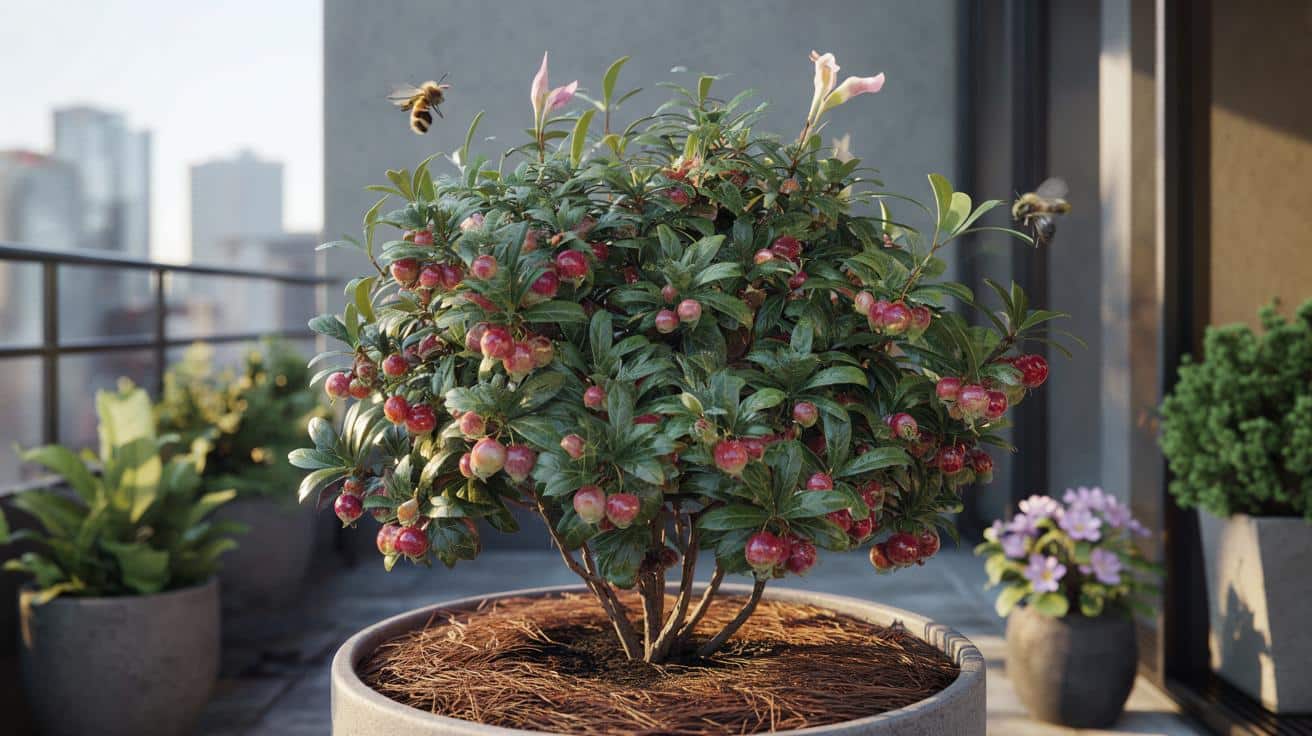
The plant causing a stir is the murtilla, known to botanists as Ugni molinae and sometimes marketed as Chilean guava or Chilean cranberry. In its native Chile and Argentina, it grows in cool, damp forests. On a UK or US balcony, it behaves like a miniature fruit tree with a bushy, elegant shape.
Compact, evergreen and slow-growing, murtilla rarely exceeds about 1.5 metres in a pot, even after several years.
This modest size is exactly what cramped urban spaces need. The plant forms a dense, rounded clump of fine branches and small leaves, which screens a railing without stealing the whole terrace. No need for regular drastic pruning or repotting marathons; its growth rate stays calm.
Visually, it sits somewhere between a box hedge and a tiny myrtle. For renters or beginners, that means one container can deliver structure, greenery and fruit without complex training or staking.
Flavour between strawberry, guava and baked apple
The main attraction, though, hangs from the shrub in late autumn. The berries – small, round and bright red to deep burgundy – look a little like over-sized cranberries. Bite into one and the comparison stops there.
Murtilla berries mix notes of wild strawberry, guava and kiwi, with a faint spicy touch that recalls baked apple.
This layered taste has made the fruit a minor cult favourite among chefs in Chile, where it appears in desserts, liqueurs and jams. In a flat in London or Chicago, it can brighten a basic yoghurt, a crumble or a simple fruit salad.
The plant offers a long season of interest. Its foliage is evergreen, with small, glossy, deep green leaves that stay neat year-round. In late spring, usually from May or early June depending on climate, the shrub covers itself in delicate, nodding flowers: tiny white or pale pink bells that release a warm, sweet scent.
➡️ No scales needed: the 1-2-2-2 method for foolproof crêpe batter using a single glass
➡️ Before, My Plants Froze Every Winter – Until I Stopped Throwing Away This Green “Waste”
➡️ A revolutionary therapy could eliminate 92% of cancer cells while preserving healthy tissue
➡️ Here Is The New Pastry Chef Succeeding François Perret At The Ritz
➡️ The judges still can’t believe it: these two French brothers just won the pastry world championship
➡️ Turning the heating down before going out? It’s probably the worst reflex, here’s why
➡️ If you want beautiful apples, this step is indispensable starting today
Those blossoms attract bees and other pollinators, which can be a real bonus in concrete-heavy neighbourhoods. On a small balcony, one well-placed murtilla can work as both a fruit crop and a mini pollinator station.
A tough “exotic” that shrugs off cold snaps
The word “exotic” often suggests fussiness: heated conservatories, special fertilisers and hourly misting. Murtilla breaks that stereotype. Coming from temperate, not tropical, regions of South America, it is far more cold-tolerant than its exotic image suggests.
Once established, murtilla can tolerate brief dips to around -10 °C, as long as roots are not waterlogged or exposed.
In much of the UK and milder US regions, a pot against a sheltered wall is enough winter protection. In colder areas, gardeners can simply wrap the container in fleece or bubble wrap and pull it closer to the house. The plant dislikes frozen roots more than frosty air on its leaves.
Soil: treat it like a blueberry, not a citrus
The main technical point is soil choice. Murtilla reacts badly to lime and heavy, chalky conditions. Gardeners who have grown blueberries or rhododendrons will recognise the recipe:
- Use ericaceous compost or “acid-loving plant” compost as the main ingredient.
- Mix in some well-rotted compost or leaf-mould for nutrients.
- Ensure excellent drainage with a thick layer of gravel or broken pots at the base.
In hard water areas, watering with rainwater collected in a butt helps maintain slightly acidic conditions. This reduces yellowing leaves and keeps the shrub vigorous.
Watering and pruning for heavy crops in a pot
To turn a decorative shrub into a genuinely productive fruiter, two practices matter: consistent moisture and gentle pruning.
Keeping the roots cool and moist
Murtilla roots sit near the surface, which makes them sensitive to drought. A scorching July weekend can stress the plant if the compost dries out completely. At the same time, soggy soil leads to root problems.
The goal is a compost that stays lightly moist, never baked hard, never swampy.
A practical approach for busy people is mulching. An organic mulch acts as a protective blanket on top of the compost:
- Pine bark or pine needles, which subtly boost acidity as they break down.
- Flax or hemp straw, which keeps moisture in and looks tidy.
- Shredded leaves in autumn, topped up each year.
This layer slows evaporation, protects the roots in cold weather and feeds the soil life over time. During heatwaves, a morning watering and this mulch can be the difference between a small crop and a plant full of berries.
Light pruning, big rewards
While many fruit trees demand careful shaping, murtilla benefits from a minimalist approach. Late winter, just before new growth starts, is the best moment:
| Task | When | Why |
|---|---|---|
| Remove dead or damaged wood | Late February–March | Prevents disease and keeps a healthy framework |
| Shorten wayward shoots | Late February–March | Maintains a compact, bushy shape |
| Thin out crowded branches | Every 2–3 years | Improves light and air, supporting flowering |
This light touch encourages branching. More branches mean more flowers and, usually, a heavier set of berries. There is no need for elaborate pruning techniques; clean secateurs and a cautious hand are enough.
From October berries to winter treats
Murtilla fruits ripen late. Instead of competing with strawberries and raspberries in early summer, it steps in when many crops are finished. Berries often colour from October and can hang on the shrub until the first real frosts.
On a balcony, that late harvest stretches the gardening season, giving you fresh fruit when most pots are already bare sticks.
The fruits can be eaten straight from the plant, though many gardeners report they intensify in flavour when fully soft and almost dropping. In the kitchen, they handle heat well. Some popular uses include:
- Jam or jelly, where their perfume really stands out.
- Berries folded into muffin or cake batter.
- Simple compote served warm over porridge or ice cream.
- Infusion in vinegar or gin for a subtly aromatic drink.
Birds may take an interest, especially in suburban gardens, so those who want every last berry might consider netting during peak ripening. That said, sharing some of the crop supports local wildlife and adds to the sense of a living, buzzing balcony.
Why murtilla suits modern city gardening
Urban gardeners often face a similar list of constraints: limited room, inconsistent light, tricky microclimates and a constant time squeeze. Murtilla aligns surprisingly well with those realities.
One medium pot, a few bags of ericaceous compost and some patience can turn a bare balcony corner into a scented, fruiting feature.
The plant’s evergreen nature means you do not end up with a lifeless-looking terrace in January. Flowers attract pollinators; the structure shelters insects and even small birds; the fruit feeds humans. That mix of aesthetics, biodiversity value and edible yield matches current trends in small-space gardening, where every plant is expected to perform multiple roles.
Practical scenarios: where and how to place it
On a North-facing balcony, murtilla will survive but may fruit less, producing mainly foliage. In a bright but not scorching West or East-facing spot, it tends to give a reliable crop. South-facing locations are fine too, if the pot is kept watered and mulched.
Pairing it with other acid-loving plants makes care easier. A cluster with a patio blueberry and a compact rhododendron means you can feed and water them in the same way. For renters, planters on wheels let you slide the shrub closer to shelter when frost is forecast.
Risks, benefits and a few helpful terms
Garden centres sometimes label murtilla as “hardy myrtle” or “Chilean guava”, which can confuse buyers expecting a true guava tree. Unlike real tropical guavas, this shrub copes with cool summers and light frosts. That difference sits behind the term “hardy”, which here refers to its ability to tolerate winter outdoors.
There are still risks: lime in the tap water can slowly weaken it; hot, dry winds can scorch leaves in exposed high-rise settings; and overfeeding with high-nitrogen fertiliser can give lots of leaves but fewer flowers. Balanced, slow-release feeds for ericaceous plants suit it better.
For anyone wanting a productive, low-drama plant to anchor a small outdoor space, murtilla offers a convincing proposition: an ornamental shrub that smells good, feeds pollinators and hands you a bowl of unusual berries just as most other fruiting pots shut down for the year.