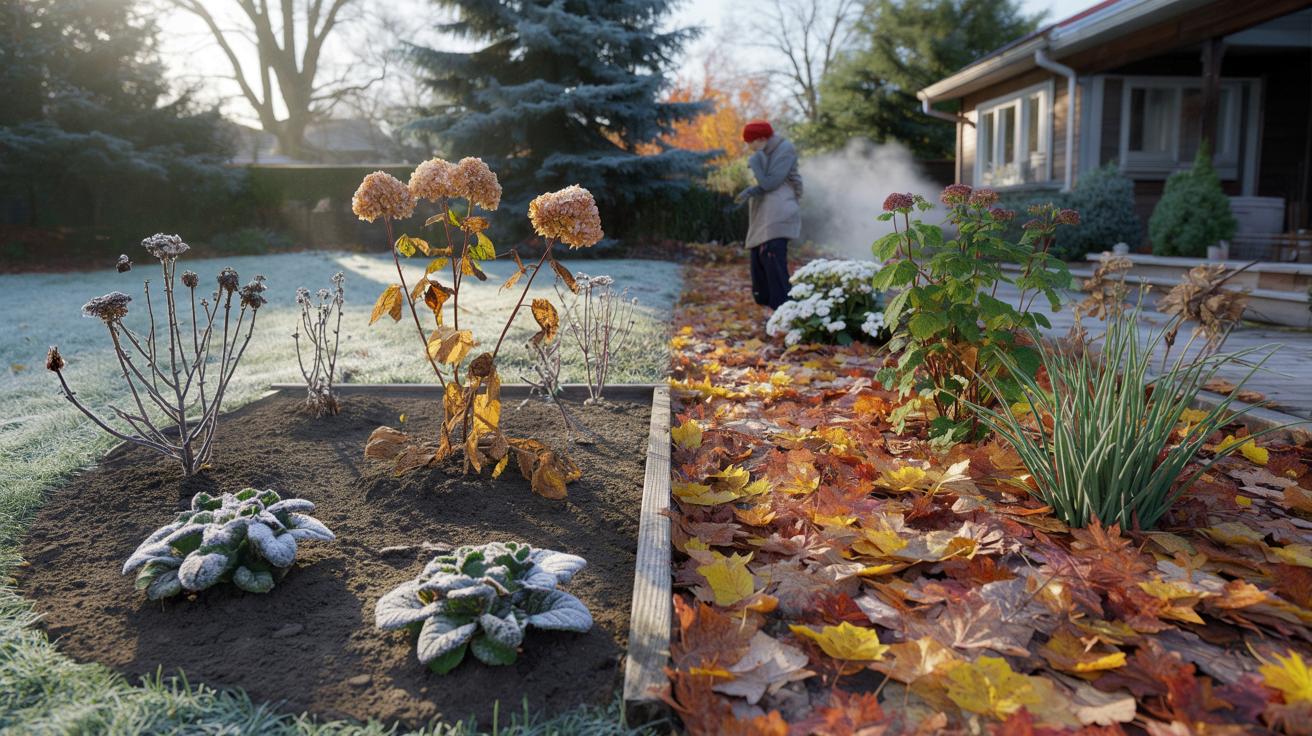
For years, the instinct has been to strip gardens bare before winter, bag up every leaf and haul it to the dump. That tidy reflex looks good on social media, yet quietly exposes roots, exhausts soil and makes plants far more vulnerable when the first hard freeze bites.
Why my “clean” winter garden kept killing my plants
The classic winter scene is familiar: clipped borders, raked lawns, no leaf out of place. It feels like good housekeeping. In reality, it is closer to sabotage.
The day I realised leaves weren’t rubbish
The turning point came during a bitter January, after another round of losses. Roses blackened at the base, hydrangeas failing to reshoot, perennials rotting away in what had been a neat, almost sterile bed. The common thread was obvious once pointed out: everything was planted in bare, exposed soil.
What I’d been dragging to the recycling centre as “green waste” was exactly what my soil needed to survive winter.
In natural habitats, there is no municipal leaf collection. Forest floors are thick with fallen foliage, twigs and dead stems. That layer is not a sign of neglect. It is a protective blanket and a pantry combined, built slowly through the seasons.
By exporting every bag of leaves, gardeners do two things at once: they strip away physical protection from the cold and they remove months of captured nutrients, all paid for by sunlight and deep tree roots.
Why bare soil and frost are a brutal combination
A naked bed in January is the horticultural equivalent of going out in a T-shirt during a cold snap. Soil has to cope with driving rain, wind and fluctuating temperatures with no buffer at all.
- Heavy winter rain washes nutrients down and out of reach of roots.
- Raindrops hammer the surface, forming a crust that blocks air and water movement.
- Repeated freeze–thaw cycles damage roots and fine soil structure.
When temperatures drop, water inside the soil expands as it freezes. Without any insulating layer, frost penetrates deeper, locking up moisture and stressing root systems. Many ornamental species can survive low air temperatures, yet fail when their roots are repeatedly frozen and dried out.
The “winter coat” I was throwing away
Everything changed when those bags of leaves stopped being rubbish and started being insulation. The same material that clogged the lawn became a low-tech, highly effective weather barrier.
➡️ You’ll Love It: This Miniature South American Fruit Tree Thrives In Pots At Home
➡️ A revolutionary therapy could eliminate 92% of cancer cells while preserving healthy tissue
➡️ If you want beautiful apples, this step is indispensable starting today
➡️ No scales needed: the 1-2-2-2 method for foolproof crêpe batter using a single glass
➡️ Here Is The New Pastry Chef Succeeding François Perret At The Ritz
➡️ The judges still can’t believe it: these two French brothers just won the pastry world championship
How a loose layer of leaves traps warmth
Dry leaves create a mesh full of tiny air pockets. Air, when still, is a surprisingly good insulator. Spread around the base of shrubs and perennials, this loose mat works just like the filling in a puffer jacket.
A 5–10 cm layer of dead leaves can raise the temperature around roots by several crucial degrees on freezing nights.
Under that layer, soil cools more slowly and rarely hits the same lethal lows as exposed ground. The harsh jumps between mild days and sharp night frosts are softened. Plants experience a kind of thermal cushioning, which reduces cell damage in roots and at the vulnerable collar where stem meets soil.
Guarding against hidden winter drought
Cold months feel wet, especially in northern climates, but winter can also be dry. Wind strips moisture from any exposed surface, including soil. When the top layer is frozen, roots cannot draw water, even though stems and evergreen leaves keep losing it to the air.
This mismatch leads to what horticulturists call “physiological drought”: plants die from dehydration while standing in cold, apparently damp soil. A leaf mulch slows this process by shading the soil, reducing evaporation and shielding it from wind, without the suffocating effect of plastic sheeting.
While the garden sleeps, the soil eats
The benefits of leaving leaves do not stop at frost protection. As winter drags on, that “messy” layer begins to feed an entire underground workforce.
From dead leaf to living humus
Beneath the mulch, even in January, microscopic life carries on. Fungi threads, bacteria, tiny arthropods and earthworms gradually shred and digest the material. The process is slow in cold weather, but it never quite stops.
The end product, humus, turns lifeless dirt into a sponge-like, resilient soil that can handle both drought and heavy rain.
Humus improves soil structure, binding particles into crumbs that hold air and water. It also stores nutrients like a battery, making them available just as plants wake up in spring. This mimics what happens on a forest floor, where no one adds fertiliser, yet vegetation flourishes year after year.
Why the leaf pile beats a bag of fertiliser
Many garden trees mine minerals such as potassium, calcium and magnesium from deep layers that vegetable roots never reach. Those elements end up in the leaves. When leaves are removed, that resource leaves with them. When they are spread back as mulch, the loop is closed.
That shift has a financial impact. With a robust mulch system, gardeners often find they need far fewer bags of compost, less granular feed and fewer soil conditioners in spring. Nutrition comes slowly, evenly and at no extra cost.
| Practice | Short-term look | Long-term effect on plants |
|---|---|---|
| Removing all leaves | Very tidy beds | More frost damage, poorer soil, higher input costs |
| Mulching with leaves | Natural, less formal appearance | Better winter survival, richer soil, fewer fertilisers needed |
Getting the mulch right: depth, timing and technique
Dumping a huge, wet mound onto everything is not the goal. Leaf mulch works best when placed thoughtfully.
How thick should the layer be?
Different areas of the garden benefit from different depths:
- Flower beds and shrubs: 5–10 cm is usually enough to insulate without smothering emerging shoots.
- Empty vegetable plots: 15–20 cm on fallow beds keeps weeds down and soil life active until spring.
- Small, low evergreens: only a light scatter around, never over, the central growing point.
A key detail is the plant collar. This is the junction where stem turns into root. It is sensitive to prolonged moisture. Always brush mulch away from this area to prevent rot, particularly on roses and herbaceous perennials.
Stopping the mulch from blowing into next door’s garden
One objection comes up again and again: the wind. Whole leaves can act like tiny sails and take off with the first winter gale. Several simple tricks keep them in place.
Chopped leaves settle faster, knit together better and rot down more evenly than whole ones.
Running a lawnmower over a carpet of leaves creates a rough “leaf confetti” that is far more stable. Spreading this shredded material around plants produces a neat, dense layer. Lightly watering the mulch after spreading, if the weather is dry, helps it settle and stick together.
Some gardeners add a scattering of compost or lay a few twiggy branches on top to weigh it down. These minor details turn a chaotic heap into a deliberate, effective protective layer.
What not to put around your plants
Not every leaf is welcome. Mixing the wrong material into a mulch can transfer problems from one season to the next.
Recognising risky foliage
Leaves that carried fungal diseases or heavy pest loads are best kept out of beds. Black spot on roses, scab on fruit trees or late blight on tomatoes all leave behind spores and resting structures that can overwinter in plant debris.
Those residues can be dealt with in a hot, well-managed compost heap that reaches high temperatures, but they should not be laid gently back around vulnerable hosts. Healthy leaves from ornamentals and non-diseased fruit trees are a safer choice for winter mulching.
Extra gains: biodiversity, carbon and less backache
Beyond plant survival, this small change affects the bigger picture. Leaf mulch provides habitat for ground beetles, spiders, solitary bees and other small creatures hunting slugs and pests. It also helps lock carbon into the soil instead of sending it off as waste.
There is a personal benefit too. Fewer frantic autumn trips with a boot full of bags, less raking, and a garden that feels more alive, even when most of it looks asleep. A slightly untidier lawn edge in November might mean a thriving border in March.
For those wary of changing habits, a simple trial can help: choose one bed, keep every fallen leaf on it as mulch, and treat a similar bed the “clean” way. By next spring, differences in soil texture, moisture and plant resilience tend to be hard to ignore.