In countless kitchens, the urge to cook clashes with missing equipment or forgotten recipes. A simple French hack, known as the 1-2-2-2 method, promises to strip crêpe-making back to basics, relying on nothing more than one ordinary drinking glass.
The crêpe problem nobody talks about
Crêpes look simple, yet many home cooks quietly dread them. Too thick, too rubbery, full of lumps, or stubbornly sticking to the pan.
Most recipes ask for precise weights and tools: a kitchen scale, measuring jugs, maybe even specialized pans. When you are cooking in a rented holiday flat, a student kitchen, or simply in a rush, that level of precision feels unrealistic.
The 1-2-2-2 method offers a memory-friendly formula: one glass and four numbers instead of grams and millilitres.
This approach has gained ground in France around events like Candlemas (La Chandeleur), a February tradition built almost entirely around eating plates of crêpes with family and friends.
What the 1-2-2-2 method actually means
The principle is deliberately straightforward. You do not weigh anything. You use the same glass as your only measuring tool.
- 1 glass of flour
- 2 eggs
- 2 glasses of milk
- 2 tablespoons of oil
Most standard water glasses work. The exact volume is less critical than the consistency: the same glass is used for both flour and milk, so the ratio stays stable.
Think of 1-2-2-2 as a rhythm: one dry measure, two eggs, two wet measures, two spoons of fat.
The mix produces a fairly classic French-style crêpe batter: thin, flexible and neutral enough to go either sweet or savoury.
➡️ A revolutionary therapy could eliminate 92% of cancer cells while preserving healthy tissue
➡️ Here Is The New Pastry Chef Succeeding François Perret At The Ritz
➡️ Before, My Plants Froze Every Winter – Until I Stopped Throwing Away This Green “Waste”
➡️ If you want beautiful apples, this step is indispensable starting today
➡️ Turning the heating down before going out? It’s probably the worst reflex, here’s why
➡️ The judges still can’t believe it: these two French brothers just won the pastry world championship
Step-by-step: how to use the method
Preparing the batter
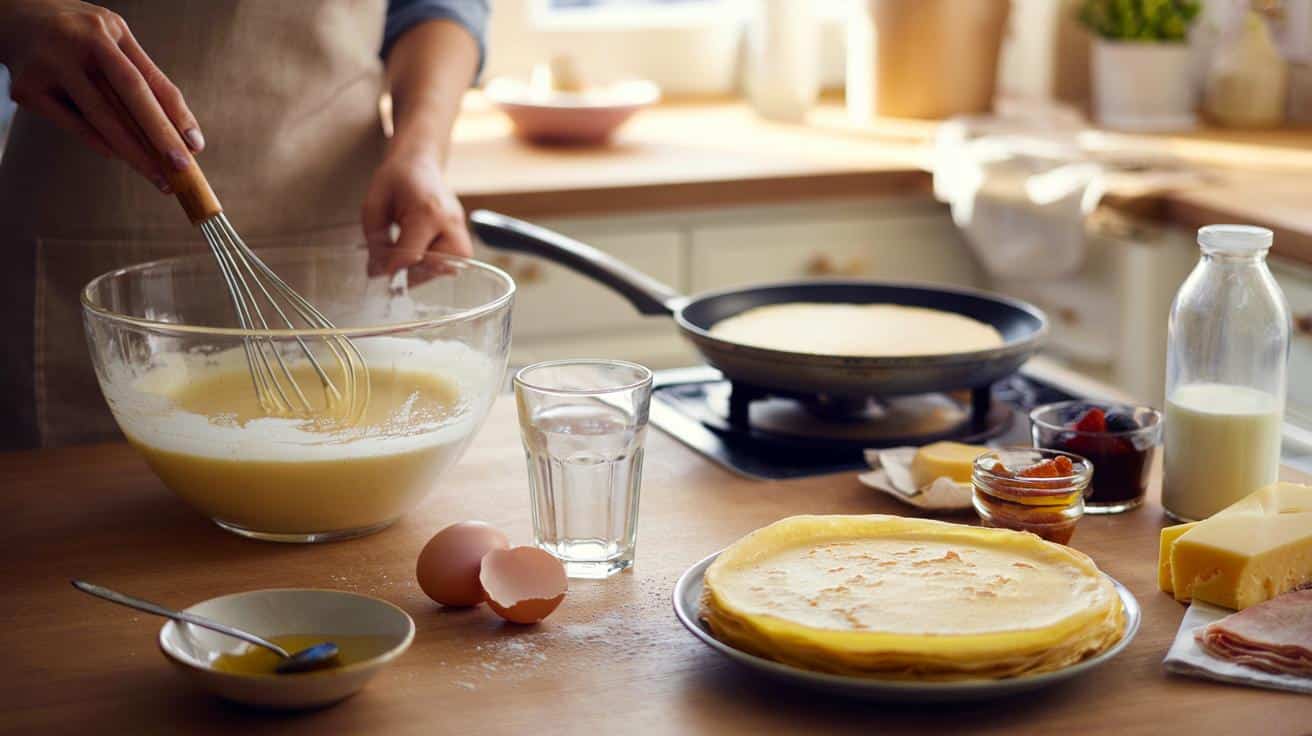
Start by sifting one glass of flour into a large bowl. Sifting is not decorative: it introduces air and helps avoid lumps.
Form a well in the centre of the flour. Crack in the two eggs, one at a time, and beat them gently with a whisk or wooden spoon, pulling in the flour from the edges as you go.
When the eggs and flour begin to combine into a thick paste, start adding the milk gradually. Pour a little of the first glass of milk, whisk until smooth, then repeat. This slow dilution keeps lumps at bay and gives you control over the texture.
Once both glasses of milk are incorporated and the batter looks smooth and fluid, add the two tablespoons of oil. Whisk again until the mixture looks glossy and slightly elastic.
Aromas and resting time
At this stage, you can decide what direction to take the batter.
- A few drops of vanilla extract for a classic sweet option
- A splash of dark rum for a more festive edge
- Orange blossom water for a delicate floral twist
Seasoning can stay minimal if you plan to go heavy on savoury toppings later.
Cover the bowl and leave the batter to rest for about an hour at room temperature. During this pause, the flour hydrates fully and the gluten relaxes, giving a softer, more flexible crêpe.
Skipping the resting stage will still produce crêpes, but the texture will be less tender and a bit more elastic.
Cooking: from bowl to plate
Heat a crêpe pan or any non-stick frying pan over medium heat. Lightly grease it with a film of oil or butter. You only need a hint of fat; too much will fry the edges aggressively.
Stir the batter briefly, then pour a small ladleful into the hot pan. Immediately tilt and rotate the pan to spread the batter into a thin, even layer.
Cook for around one to two minutes on the first side, until the surface looks set and the edges start to lift. Flip with a spatula and cook the other side for about a minute.
Keep the cooked crêpes on a warm plate, stacked and loosely covered with a clean tea towel to preserve softness.
Sweet or savoury: why the base batter stays neutral
The 1-2-2-2 formula does not include sugar. That is deliberate. A neutral batter can be used in multiple ways, which suits modern households looking to stretch one mix across a full meal.
| Type | Examples of toppings |
|---|---|
| Sweet | Jam, melted chocolate, caramel, fresh fruit, lemon and sugar |
| Savoury | Ham and cheese, sautéed mushrooms, spinach and egg, smoked salmon and cream cheese |
For a family table, one stack of neutral crêpes can start with a cheesy mushroom filling and end with chocolate and banana, with no new batch required.
Why the method works for non-bakers
A lot of home cooks operate by feel rather than scales. Recipes filled with numbers can feel intimidating, especially for casual occasions or late-night snacks.
The 1-2-2-2 approach compresses the recipe into something you can store in your head, not in a cookbook.
There is also a psychological factor. Measuring by glass feels less formal, more forgiving. People are more likely to try a recipe when the entry barrier is low.
For students or people living in shared flats with poorly equipped kitchens, this kind of method can be the difference between ordering takeaway and actually cooking something fresh.
Adjusting texture without breaking the ratio
Every flour behaves slightly differently, and glasses vary in size. The batter should have the consistency of light cream: fluid, but not watery.
If your batter seems too thick and spreads poorly in the pan, whisk in a splash of milk or water, a little at a time. If it is too runny and forms translucent sheets, sprinkle in a spoonful of flour and whisk thoroughly.
These tiny corrections do not clash with the 1-2-2-2 spirit. They simply fine-tune the base ratio to your specific ingredients.
From Sunday brunch to last-minute hosting
Once you learn the sequence, it becomes easy to adapt it to different situations. Hosting an impromptu brunch? Double the quantities: two glasses of flour, four eggs, four glasses of milk, four tablespoons of oil.
For a couple or a solo cook, you can halve the glass amount and keep the same ratios. Use half a glass of flour, one egg, one glass of milk, one tablespoon of oil. The rhythm stays the same, only the quantities shrink.
Parents often find this structure handy for involving children in cooking. Kids can count the numbers and pour the glasses, turning a basic recipe into an easy maths exercise.
Variations and small risks to watch
Playing with the base recipe is tempting, but some changes carry side effects. Adding sugar to the batter, for instance, encourages faster browning and can burn the edges if the pan is too hot.
Switching from regular milk to plant-based drinks works, though textures vary: oat milk tends to give a slightly thicker, softer crêpe than almond milk. Using buckwheat flour instead of wheat will produce a more rustic, brittle crêpe unless you blend it with some white flour.
The main risk with the 1-2-2-2 method is overconfidence. The simplicity can lead people to rush, skipping the resting time or overheating the pan. Both choices can produce tough or patchy crêpes. Staying patient through the rest and maintaining moderate heat usually fixes those issues.
Linking a simple recipe to wider cooking habits
Behind its simplicity, the 1-2-2-2 method says something about how many people now cook. Recipes that rely less on equipment and more on visual cues fit people who move often, travel, or cook in multiple kitchens.
Once you get used to measuring with a glass, you may start applying the idea to other dishes: quick pancake mixes, simple cakes, even savoury batters for fritters. Ratios replace strict recipes, giving more freedom while still offering a safety net against complete failure.
For those trying to cook more at home without turning every meal into a project, low-tech tricks like this can quietly shift habits. One glass, four numbers, a hot pan – and suddenly crêpe night is no longer reserved for people with a perfectly equipped kitchen.