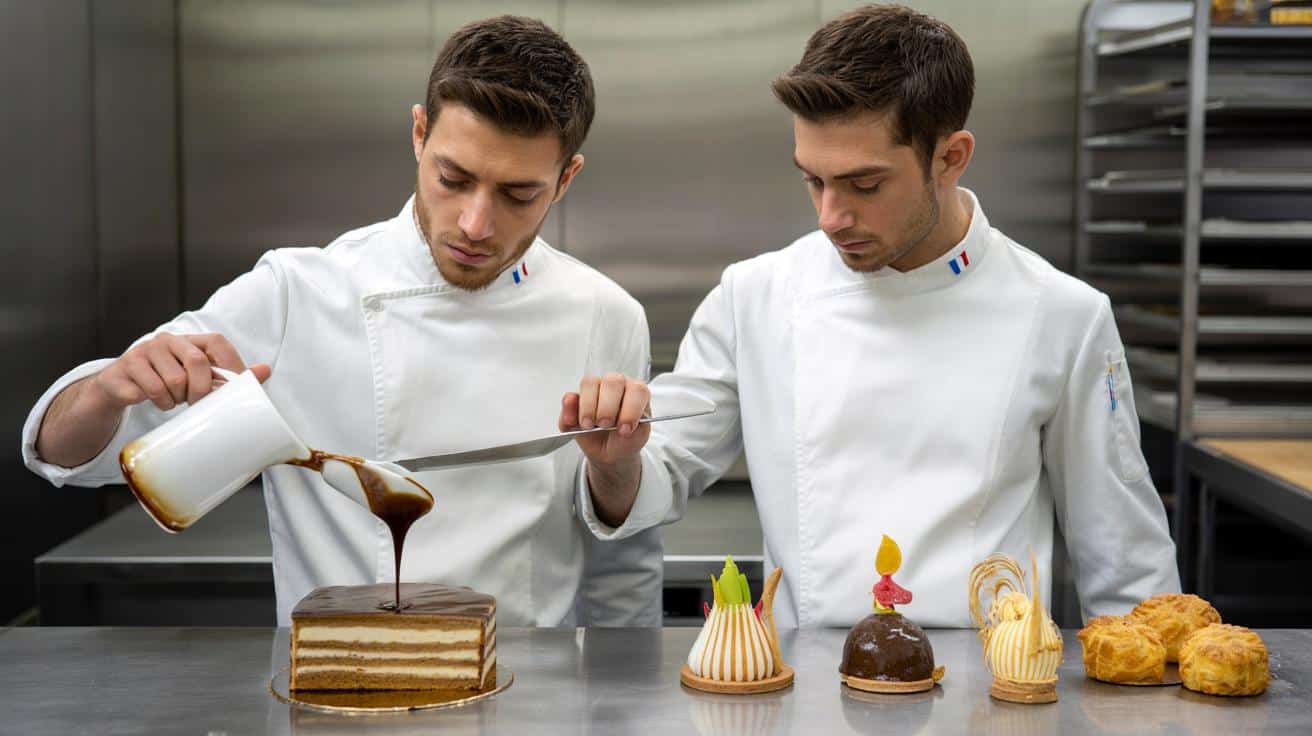
Far from Parisian showrooms and glossy TV sets, a pair of 22-year-old twins from a small Alsatian village stunned an international jury and walked away with a title many seasoned professionals spend a lifetime chasing.
From Alsace to Rimini: twins who baked their way to the top
The new junior pastry world champions are Mathis and Samuel Anstett, twin brothers from Zimmersheim, a village in France’s Alsace region. They grew up side by side, trained in the same kitchens and learned the same knife strokes and piping techniques. In January 2026, that shared apprenticeship paid off on the grand stage of Sigep, a major international pastry and gelato fair held in Rimini, Italy.
In the junior world championship category, the twins were pitted against 18 teams representing countries from every continent. Each team had ten hours, no extension, to impress a demanding jury with a series of strictly codified challenges.
The pair had exactly ten hours to design, bake and plate an entire pastry collection capable of convincing an international jury of experts.
Under the eye of their coach, French pastry chef Alexis Beaufils, the brothers moved like a single unit. One tempered chocolate while the other checked sugar temperatures. One adjusted the coffee balance in a vegan glaze while the other refined the final decoration. Their teamwork, built over years of shared training, became their sharpest tool.
Inside the brutal 10-hour marathon
The competition brief reads like a nightmare for any pastry student, and a dream playground for true obsessives. The Anstett brothers had to complete four major tasks, each judged on technique, flavour, innovation and presentation.
- A vegan coffee cake, free of any animal products but still rich, balanced and structurally sound.
- A street food-style dessert inspired by France, served in a fun, accessible format.
- A naturally leavened breakfast item, using sourdough for flavour and texture.
- A 1.20-metre chocolate showpiece, stable enough to stand tall, delicate enough to look light.
Every element was evaluated: crunch, creaminess, baking precision, respect of vegan rules, creativity of the French “street dessert” and, of course, the visual shock of the towering chocolate sculpture. One misstep could send months of preparation crumbling, literally.
From the first gram of cocoa butter to the last spun sugar thread, every move was tracked and scored. There was no space for improvisation.
According to people present at the event, the brothers kept a striking calm as the hours passed. Where other teams hesitated or reworked elements, the Anstetts followed a schedule rehearsed again and again in training kitchens back home in Alsace.
➡️ Turning the heating down before going out? It’s probably the worst reflex, here’s why
➡️ You’ll Love It: This Miniature South American Fruit Tree Thrives In Pots At Home
➡️ Here Is The New Pastry Chef Succeeding François Perret At The Ritz
➡️ Before, My Plants Froze Every Winter – Until I Stopped Throwing Away This Green “Waste”
➡️ If you want beautiful apples, this step is indispensable starting today
➡️ A revolutionary therapy could eliminate 92% of cancer cells while preserving healthy tissue
Beating pastry powerhouses from Asia
On the scoreboard, the French team edged out two heavyweights: South Korea and China, countries that invest heavily in international pastry competitions. Both ended up sharing the podium with the twins, but the gold medal went to the quiet duo from Zimmersheim.
Judges reportedly praised their precision, the clear line running through all the creations, and the consistency between taste and aesthetics. Nothing felt like a gimmick. The vegan coffee cake had real depth, the street-food dessert stayed playful without losing finesse, and the chocolate showpiece managed to be ambitious without turning into a fragile sculpture on the brink of collapse.
From TV show contestants to confirmed champions
French viewers might remember the Anstett brothers from “Le Meilleur Pâtissier: Les Professionnels” on M6, where teams of pastry chefs compete on screen. Their natural on-camera chemistry and four-hands style made them stand out long before Rimini.
The Sigep title confirms that they are not just TV faces. They are technicians, planners and competitors capable of performing under heavy pressure, away from the spotlight of a studio audience.
The trophy at Rimini validates what many pastry insiders already suspected: this duo is in it for the long run.
Their victory also sends a subtle signal to young pastry chefs: you don’t need to be based in Paris or London to reach an international stage. A solid apprenticeship, relentless practice and a clear creative identity can push anyone from local bakeries to global podiums.
What this win means for Alsatian pastry
Alsace is well known for its kougelhopf, bredele biscuits and Christmas markets, but the region is now gaining recognition for a new generation of pastry talent. The brothers grew up surrounded by traditional recipes, yet chose to step into contemporary competition pastry with vegan cakes and chocolate sculptures.
Local pastry shops already feel the effect. Young apprentices in Alsace now have role models who speak their dialect, share their background and show that international titles are within reach. Regional schools and training centres may use this success to lobby for better equipment, more advanced classes and stronger links with global contests.
Why being twins is a secret weapon in the kitchen
In a normal professional kitchen, communication can get noisy. Orders fly, timings clash, and misunderstandings cost minutes. For twins who have cooked together their entire lives, much of that friction disappears.
Mathis and Samuel reportedly barely need words during service. A glance is enough to know who handles the glaze, who pulls the tray from the oven, who corrects the piping on a faulty entremets.
Their “twin language” becomes an operational advantage: faster decisions, cleaner workflow, fewer mistakes in critical moments.
Other teams at Sigep, assembled for the competition only months in advance, had to build trust while juggling ultra-complex tasks. The Anstett brothers arrived with trust already ingrained, freeing mental space for creativity and attention to detail.
What makes a world-class pastry championship so tough?
To understand the weight of this win, it helps to look at what these championships actually measure. Judges are not just checking if a cake tastes good. They grade on several axes:
| Criteria | What judges look for |
|---|---|
| Technique | Mastery of classic methods like tempering, lamination, and sugar work |
| Flavour | Balance, intensity, and clarity of taste without overwhelming sweetness |
| Structure | Stability of cakes and sculptures, clean cuts, correct textures |
| Creativity | Original ideas that still respect pastry traditions and rules |
| Organisation | Hygiene, time management, and teamwork over long hours |
In a vegan coffee cake, for instance, eggs and dairy are off the table. Pastry chefs then rely on plant-based milks, oils, fibres and sometimes aquafaba to create volume and tenderness. Getting a rich, creamy mouthfeel without butter or cream demands a solid understanding of ingredient science.
The 1.20-metre chocolate structure brings its own hazards. Tempered chocolate shrinks slightly as it sets, can crack under temperature changes and hates humidity. To build a vertical piece that tall, chefs need a mix of engineering and intuition. One unstable base or a warm spotlight in the wrong place, and the whole work can collapse minutes before judging.
What home bakers can learn from the Anstett brothers
Most people will never sculpt a chocolate tower or plate a dessert under the gaze of an international jury. Yet there are practical lessons hidden in the twins’ victory that any home baker can use.
- Plan like a pro: write a timeline before starting a big bake. Note cooling times, proofing times and decoration windows.
- Respect structure: when trying vegan or gluten-free recipes, think about the role each ingredient plays rather than swapping at random.
- Train specific skills: choose one technique—piping, chocolate curls, even neat glazing—and repeat it regularly instead of changing projects every week.
- Test under pressure: try making a familiar dessert with a set time limit. It reveals where you lose minutes and where chaos creeps in.
For aspiring professionals, the Anstetts’ path also underlines the value of competitions themselves. Contest preparation forces young chefs to refine recipes, document processes and get comfortable with criticism. Even without a medal, the progress made along the way can shape a career.
Where this could lead for the twin champions
Winning Sigep’s junior title does not guarantee a glamorous future, but it does act like a powerful business card. High-end hotels, restaurant pastry labs and luxury boutiques watch these competitions closely, scouting their next recruits and collaborators.
The twins have expressed a desire to keep creating and evolving, instead of rushing into overexposed projects. That could mean spending time in top-tier pastry houses, opening a signature boutique in Alsace, or building a brand around modern, lighter desserts that keep a nod to their regional roots.
Behind the medals and TV memories, their main asset remains simple: a shared vision of pastry as a craft built day after day, recipe after recipe.