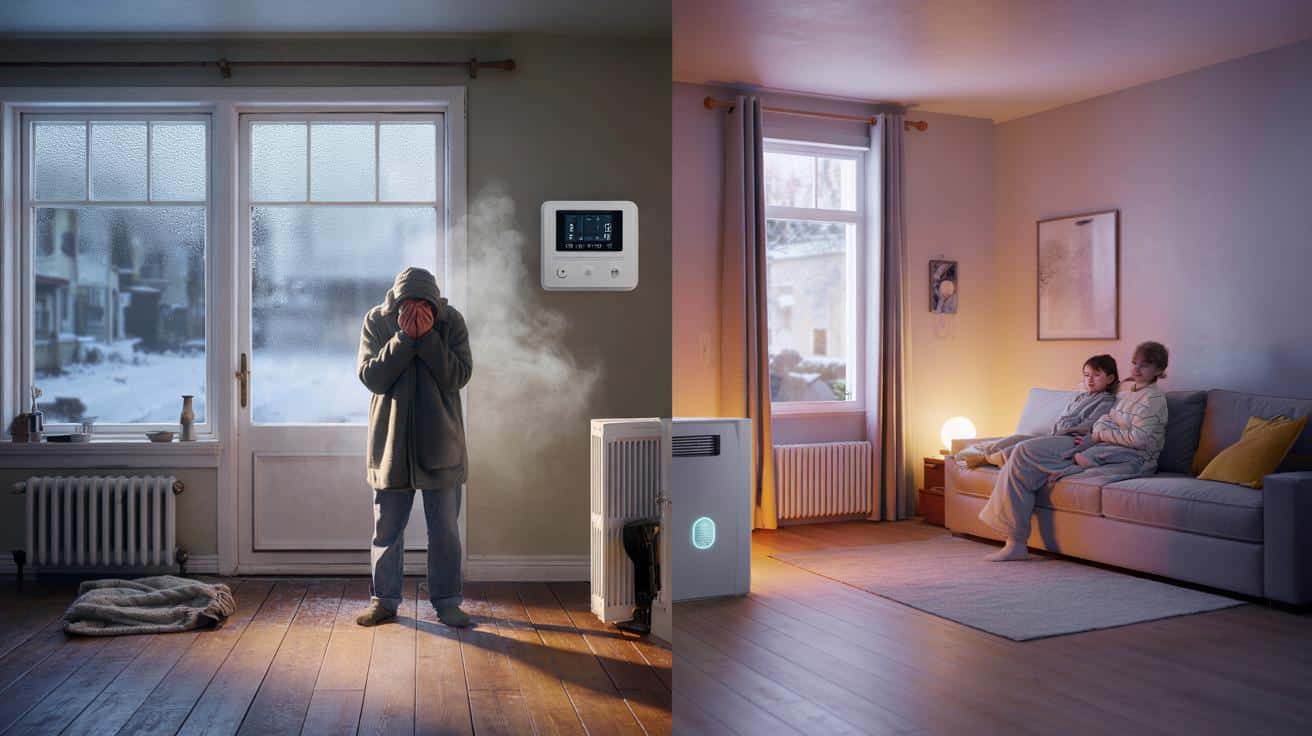
The reality at home is far less cosy.
Across Europe and North America, energy prices push households to scrutinise every degree of heat they use. One of the most common reflexes sounds smart on paper: turn the heating right down, or even off, when you leave for a few hours. Yet building physics, and a growing body of data from energy agencies, tell a very different story.
Why cutting the heating can quietly raise your bill
The core problem lies in how a home actually behaves when it cools down. Heating isn’t just warming air; it’s warming the entire building.
When you let a home go cold, walls, floors, ceilings and furniture all soak up the chill – and they must all be reheated later.
Air heats up fast. Solid materials do not. When you slash the temperature before leaving for a short trip, the house spends hours slowly losing its stored heat into the outside air. The colder it gets inside, the more the building “loads up” with cold and, often, moisture.
Once you walk back in and crank the thermostat up again, your boiler, heat pump or electric heaters need to work harder and for longer. They’re not just warming the air to 19–20°C. They’re fighting the cold trapped in bricks, concrete, timber and soft furnishings.
Energy specialists point out that this reheat phase can use more energy than if the temperature had simply been nudged down by a couple of degrees and held steady. The illusion of saving money during the “off” period is often cancelled by a big rebound in consumption later on.
The comfort trap: why a cold house feels cold for hours
There’s also a human side to this: perceived comfort. People often report that their home feels chilly long after the thermostat shows the “right” temperature.
When surfaces stay cold, you feel cold, even if the air is technically warm enough.
This comes down to radiant temperature. If your walls and windows are cold, your body radiates heat towards them. You sense this as a drafty, harsh environment. The result: you push the thermostat higher than usual just to feel normal again, burning through extra kilowatt-hours.
➡️ Here Is The New Pastry Chef Succeeding François Perret At The Ritz
➡️ If you want beautiful apples, this step is indispensable starting today
➡️ Before, My Plants Froze Every Winter – Until I Stopped Throwing Away This Green “Waste”
➡️ A revolutionary therapy could eliminate 92% of cancer cells while preserving healthy tissue
➡️ The judges still can’t believe it: these two French brothers just won the pastry world championship
➡️ You’ll Love It: This Miniature South American Fruit Tree Thrives In Pots At Home
In very cold spells, particularly when outdoor temperatures fall below freezing, the problem gets worse. The building loses heat more quickly, interior surfaces cool more deeply, and the system takes longer to catch up. That “quick blast of heat” you hoped for becomes an expensive, drawn-out reheating marathon.
Reduce, don’t switch off: the sweet spot for short absences
Energy experts across Europe tend to converge on one simple rule for everyday life: for absences shorter than about 24 hours, you should reduce the heating, not stop it entirely.
For a day at work, a dinner out or a quick visit to family, the most economical move is a modest setback, not a blackout.
Letting the temperature drift down by 2–3°C during the day limits heat loss while preserving the building’s “thermal inertia” – its stored warmth. Walls and floors stay reasonably temperate, so they don’t act like giant ice blocks when you come back.
This approach delivers several benefits:
- Lower energy use while you’re away, thanks to a small temperature drop.
- Faster return to comfort on your arrival.
- Less strain on the heating system, which runs more steadily and efficiently.
- Reduced risk of condensation and damp on cold surfaces.
That strategy fits well with everyday rhythms: commuting, school runs, errands, gym sessions or an evening at the cinema. The house cools slightly, but never to the point where it becomes a fridge.
How a programmable thermostat quietly earns its keep
For many households, the most effective tool for getting this balance right is a programmable thermostat or smart heating control.
Automation removes guesswork: you define the comfort you want, the system handles the rises and dips.
Typical settings recommended by energy advisors in temperate climates look like this:
| Situation | Recommended temperature |
|---|---|
| At home during the day | 19–20°C in living spaces |
| Short absence (workday or evening out) | 16–17°C |
| Night-time in bedrooms | 16–17°C, sometimes slightly lower for good sleepers |
| Long absence (several days away, mild weather) | 12–14°C, depending on insulation and risk of freezing |
Modern thermostats can start raising the temperature shortly before you get home, so the place already feels comfortable when you walk through the door. Smart models linked to a phone can adapt if your schedule changes, and some even learn your habits over time.
What studies say about thermal inertia and energy use
Across various European and North American studies on residential heating, one finding comes back again and again: buildings don’t behave like kettles. They behave more like big, slow heat batteries.
The technical term often used is “thermal inertia”. Materials such as brick, stone and concrete store heat and release it slowly. This makes abrupt stop–start strategies less efficient in many situations.
The colder a home is allowed to get, the more energy it usually takes to bring it back to a comfortable level.
Research also highlights another side effect of aggressive cooling: condensation and damp. When indoor surfaces drop below a certain temperature and meet moist indoor air – from cooking, showers or just breathing – water can form on walls and windows. Over time, that raises the risk of mould growth, damage to finishes and poorer indoor air quality.
Energy agencies generally recommend a controlled, moderate setback for short and medium absences. Full shutdown tends to make sense only for long holidays, and even then with a frost-protection setting rather than a true zero.
Every home is different: when deep setbacks can work
There are exceptions. Some very well insulated, airtight homes with underfloor heating or advanced heat pumps can handle deeper temperature drops without major penalties. Their heat loss is so low that the building cools slowly, and reheating doesn’t require such a violent effort.
Likewise, in mild shoulder seasons, when outdoor temperatures are not far from indoor comfort levels, larger setbacks can make more sense. The gap the heating system has to overcome is smaller, and the walls never really get bitterly cold.
The key is understanding your own building: its insulation level, its windows, its heating system type and its exposure to wind and shade. A poorly insulated Victorian terrace with single glazing behaves very differently from a new-build passive house, even in the same city.
Practical scenarios: what really happens with your bill
Imagine two neighbours in similar semi-detached houses on a frosty January Saturday. Both leave home at 9am and return at 7pm.
- Neighbour A turns the heating off completely.
- Neighbour B drops the thermostat from 20°C to 17°C.
By early afternoon, neighbour A’s home has cooled to 13–14°C. Surfaces are cold, and relative humidity has crept up. At 7pm, they slam the thermostat back to 20°C. The boiler roars to life and runs hard for hours as it reheats air, walls and furnishings.
Neighbour B’s home never falls below 17°C. When they return, a modest boost is enough to regain full comfort quickly. Their boiler runs, but without the intense, prolonged effort seen next door.
Over the course of the day, neighbour A may have used less energy between 9am and 7pm. Yet the aggressive reheat in the evening can easily eat into that apparent saving. In many measured cases, the total daily consumption is the same or higher than with a gentle setback.
Key terms that help make sense of your heating
Two concepts can help households make better choices:
- Thermal inertia: the way a building resists changes in temperature. High inertia means it stays warm longer but also takes longer to heat up from cold.
- Setback temperature: the lower target temperature you choose when away or asleep. A smartly chosen setback saves energy without forcing a harsh reheating phase.
Understanding these ideas helps explain why that comforting twist of the thermostat to “off” before you rush out can backfire financially. A small, planned drop tends to beat a dramatic plunge followed by a desperate scramble back to warmth.
Beyond bills: health, moisture and everyday life
The conversation around heating often sticks to money, but comfort and health are closely tied to temperature and humidity. Repeated cycles of deep cooling and rapid reheating can push indoor humidity up and down, stressing both the building and its occupants.
Rooms that stay moderately warm are less prone to condensation on cold corners and window frames. That reduces the conditions in which mould thrives, which in turn benefits people with asthma or respiratory sensitivities.
For households juggling work, childcare and tight schedules, a well-tuned heating routine removes one small source of daily hassle. Instead of constantly thinking “Did I turn the heating down?”, the home quietly adapts around your life – staying warm enough to be welcoming, but not so hot that it burns through your budget.